

I N S I G H T S
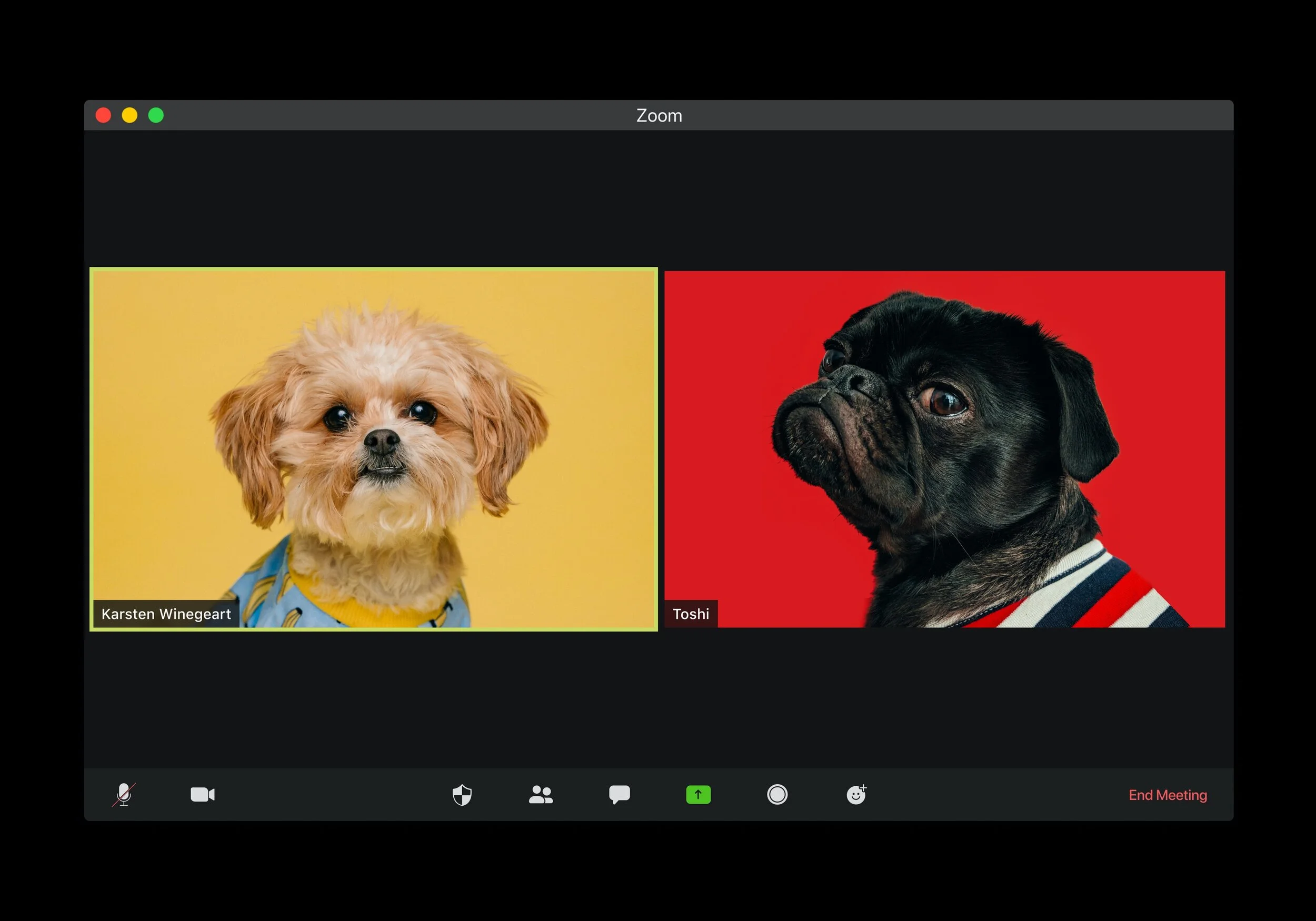
5 Key Adjustments for Virtual Solicitations
We know solicitations can feel awkward, period. So if you feel uncomfortable or apprehensive about the idea of a solicitation over Zoom, you are not alone. However,…
We know solicitations can feel awkward, period. So, if you feel uncomfortable or apprehensive about the idea of a solicitation over Zoom, you are not alone. However, in reality, the preparation and execution of a virtual solicitation is largely the same as it is in-person. By using your normal approach as a guide and making a few key adjustments, you can improve your virtual solicitation experience for yourself, your volunteers, and your donors.
Why go virtual?
EDEN+ published this Corona Virus and Philanthropy blog post around one year ago, just as the United States was beginning to process what life with COVID-19 would look like. Last week, the Associate Press published an article titled “Pandemic puts 1 in 3 nonprofits in financial jeopardy”— citing a recent study by the philanthropy research group Candid and the Center for Disaster Philanthropy. If there is anything that has become clear over the last year it is this: Now is not the time to resist change. To survive these unprecedented times, nonprofits must continue to think outside of the box and try new approaches.
“At first I wasn’t sure if virtual solicitation would work. But over time, we realized that virtual meetings have been beneficial, especially for the “snow birds” on our committees who, in a normal year, wouldn’t be able to participate face-to-face.”
-Sara Wilson, Development Director, On With Life
Not only are virtual solicitations a safe way to follow the CDC’s COVID-19 guidelines, but they also offer a convenient way for nonprofits to secure meetings with potential donors who are out of town or extremely busy. By mastering the art of virtual solicitations now, you will be able to confidently rely on this tool well into the future— even after COVID-19 subsides!
Basic solicitation prep
The basics of solicitation preparation are the same whether you’re sitting across the table from a donor or sitting across the country. Before you click on that Zoom link, make sure to brush up on the donor's background, pay close attention to your proposal strategy, and have a mistake-proof plan for success.
“In instances where individuals share an organization Zoom account, it’s helpful to understand who is actually logging in and “hosting” the meeting. We ran into a situation once where there was no host, and it was awkward to navigate when people needed muting.”
-Sara Wilson, Development Director, On With Life
“Definitely test out the technology beforehand. Make sure you understand the audio, video, and screenshare buttons and that your internet connection is stable. If all else fails, have a Plan B that you can quickly pivot toward. And if you're tag-teaming a solicitation phone call, determine beforehand how you and the other person representing the organization will communicate in the absence of non-verbal cues to have smooth transitions, such as by sending texts or direct messages.”
-Megan Kassmeier, Director of Development, Bergman Academy
As with any in-person solicitation meeting, you should come to a virtual solicitation prepared with a succinct proposal tailored to that specific donor. A personalized touch can change what would be a “no” to a resounding “yes” in no time. Even if a donor has a well-known or deeply rooted connection to your organization, push yourself to dig deep and find a new way to connect with them. Your proposal should explain your organization’s current need, place the prospect in a position to bring about substantial change, and provide a clear partnership opportunity. By customizing the content of the meeting to the donor, you’re making them feel vital to the effort.
“Many of us are accidentally showing off kids, pets, and other personal elements of our life during virtual visits. Leave time and space for people to show off their dog and you can pick up yours. Or if you are talking about legacy ask if a donor has a photo on their wall of a loved one they feel connected to. Life is not business as usual so feel free to lean into that intimacy.”
-Tyler Timko, Senior Consultant, EDEN+
“There is nothing more culturally important that sharing a meal or experience with others. That is why we do lunches and coffees and face to face meetings. Replicate that feeling by having a treat delivered that you can both enjoy at the same time. Chocolate from the local sweets shop or a single serving glass of bubbles that feels celebratory with a virtual Cheers!”
-Sarah Stephany, Associate Director, EDEN+
Still, nothing can tank a solicitation meeting faster than disorganization. When you head into solicitation meetings—virtual or not—be sure to always have a plan for anything that could go wrong. Ensure everyone on your team clearly understands their role in the process and practice together several times before the day-of.
5 key adjustments for virtual solicitations
1. Request a face-to-face video call
When reaching out to a potential donor for a virtual solicitation meeting, it is very important to explain that you would like to meet face-to-face over a video call. If the donor suggests meeting over a phone call, explain that the video platform will allow you to share more detailed information with them in real-time.
2. Make your intentions clear
In addition to clearly requesting a video call, also be sure that you express your intention to discuss their support during the virtual meeting. No one likes a surprise solicitation—especially not one over Zoom. Donors will appreciate being treated like a vital part of the organization and not like a last-minute thought.
Not sure how to approach this? Here’s a suggestion: “Even with the burden of social distancing, we’ve been able to have many thoughtful conversations over Zoom lately. I’d love to schedule a time to chat with you virtually about our upcoming plans and discuss your support.”
3. Timing is everything
Consider blocking out more time than you expect to need when scheduling a virtual solicitation. Technology issues can pop out of nowhere and steal precious time; it’s always better to be safe than sorry. Plus, no one minds when a meeting wraps up early!
When preparing for your virtual solicitation presentation, keep brevity front-of-mind. Zoom fatigue is real! The best way to ensure your potential donors are engaged in the call is by focusing on conversation that includes them in the dialogue.
4. Share materials ahead of time
A great way to avoid droning on for several PowerPoint slides in a row is by sharing the meeting’s materials with the prospect ahead of time. If you send over the materials in advance, your prospect will likely feel more comfortable coming into their virtual solicitation and the call can be more discussed-based.
“It’s vital to have your organization’s key data on the website. In email correspondence, be sure to include hyperlinks to important information. Beyond that, look into new technology that customizes the donor experience. We’ve started using a cool product called Ovrture which allows you to personalize a website for your donors.”
-Joan Bindel, Senior Director of Development, MercyOne Des Moines Foundation
“During virtual solicitations and discussions, it's often harder to tell if someone has finished their thought, so interruptions or speaking over each other is a lot easier to do unintentionally. Try to keep the pace of your responses a little slower to accommodate and watch for non-verbal cues as much as possible. Don’t be afraid to repeat back their questions or comments to make sure you truly understand.”
-Megan Kassmeier, Director of Development, Bergman Academy
5. The Virtual Ask
When the time comes to make the virtual ask, make sure to look at the donor. We know what you’re thinking: “Duh?” But pause for a moment to consider where your eyes tend to go on video calls— on yourself! We’re all guilty of this habit, but don’t forget to do everything you can to make confident eye contact with your prospect when conducting a virtual solicitation.
“Keep the emphasis on face-to-face conversation rather than screenshare to make it more personal and less like a presentation. Using speaker mode instead of gallery has helped me make sure my focus is truly on the other person.”
-Megan Kassmeier, Director of Development, Bergman Academy
More than anything, don’t tiptoe around the solicitation when the time comes. By this point in the call, the prospect knows what to expect. Leaving out an ask after setting one up can leave donors feeling confused and frustrated. Beyond that, waiting to ask can be costly.
Following up on virtual visits
Immediately following your virtual solicitation, send the donor a quick follow-up thank you email. If they closed their gift, outline exactly what was agreed upon. If they are taking time to reflect on their decision, remind them of your next meeting time.
If you really want to stand out, consider also sending the donor a handwritten thank you note. Just because the solicitation was virtual doesn’t mean your gratitude has to be too! Doing whatever you can to make your donors feel special will always pay off.
“Thank you notes are a great time to include information to prepare and excite donors to return to your organization on site as soon as safely possible. In addition, some of my colleagues have had success holding weekly virtual impact meetings where they invite just a small handful of donors for a 20-minute update. They hold these meetings no matter if one person or ten people attend. Consistency is important.”
-Joan Bindel, Senior Director of Development, MercyOne Des Moines Foundation
Regardless of how you follow-up on your virtual visit, we recommend thinking outside of the box. There is no time like the present to try new ways to interact with your donors.
If you have specific questions or tactics you would like to address, the EDEN+ team is offering free 30-minute consultations as we work to support our nonprofit partners in these challenging times. To set-up a time to speak via video chat or phone, please contact info@edenplus.org.

Build an Endowment Like a University
We must have seen it 1,000 times. A well-meaning organization wants to “add-on” an endowment piece to their capital campaign. As the interviews progress, it becomes clear that donors are more interested in the building project. While they understand the desire to build the endowment, the impact seems more diffused and less tangible, especially if its going to a general fund that supports operations.
So, aside from their budgets and massive development operations, how are billion-dollar endowments the norm for universities, and local organizations struggle to scratch out a few million dollars?
The answer is universities are not afraid to designate their endowment funds. In fact, Harvard, owner of the largest university endowment (of $40 BILLION), estimates that around 80% of their endowment is designated for a specific purpose. Colleges do not just put names on buildings, they put them on scholarships, faculty positions, and programs.
Many organizations worry that if funds are restricted they won’t have the flexibility to pay for the things they really need. But why not endow things you know will be in the budget? Take an Executive Director or CEOs salary, for example. If even half their salary is covered by a restricted endowed fund, the funds that normally would have been used for salary are freed up to use however you wish--unrestricted!
It can be difficult to project that far into the future, which is why it is important to discuss potential back-up options when putting together a gift agreement. Let’s say a donor is interested in endowing a middle school educational program put on by a local theater. In the gift agreement, you may include language that indicates, should this particular program no longer exist, the funds may be used for other educational programs.
The secret universities are on to is that even if a gift is restricted, it will still result in more unrestricted dollars in the budget. And we know donors like understanding specifically what their gift is achieving. So try changing the conversation around endowment giving, keeping the focus on that magic intersection between the donor’s goals and the needs of your organization.

Read this Before Buying a Donor List
It’s a question often posed by eager board members—where can we find new donors? If you dig a little deeper, however, you will probably uncover that what the board really wants is more total donors, not just new donors. So while we will discuss where to find new donors shortly, a good first step is to check your donor retention rate.
The overall donor retention rate typically averages around 45% year to year. For first time donors, that rate drops to 20-25%, and is about 60% for multi-year donors. If your organization is not at (or ideally above) these averages, focusing on these donors will provide the highest return. If your retention rates are lower, adding new donors will simply be dumping water from a leaky boat. Unless you fix the leak, you will eventually sink.
But even if your retention rates are in good shape, every organization experiences some donor attrition, so everyone needs to find new donors. While some may look externally, your best source for new donors are those already in your database.
First, think of your lapsed donors. Quite simply, those that have donated to your organization before are more likely to give again than any other group (besides current donors), even if they have missed a year or two. Do not make the dangerous assumption that they have permanently stopped giving.
After your lapsed donors, think of anyone on your database that has not made a gift. This is perhaps the most overlooked group for new donor acquisition. Do not go purchase a list when you likely have plenty of prospects already in your database who have interacted in some way with your organization. These could be newsletter subscribers, ticket buyers, volunteers, patients, alumni, parents, etc. This group is going to have far greater affinity than any list that could be purchased.
If you find this group is not that big, consider where you may be missing opportunities to collect contact information from event attendees, volunteers, and others who interact with your organization.
There are some other exercises, such as working with board members and their connections, that can yield higher capacity, but less quantity of potential donors. This can be helpful for special efforts like capital campaigns. Click here for a prospecting exercise designed for your board.
In summary, to grow your donor base your focus should be on the following (in order):
Current donors
Lapsed donors
Anyone on your database that is not a donor (volunteers, event attendees, etc.)
List purchase (only after the top three have been exhausted)
Bottom line: There is more than likely a lot of untapped potential at your fingertips. Start with your database to get the best bang for your buck.

Building Versus Bringing Relationships
“Can you get us in front of (insert well known philanthropist)?”
“Who do you know?”
“Will (local philanthropist) make a big gift to support us?”
Sometimes these questions are explicit and sometimes they are implicit when boards are considering a consultant. Of course they are all well intentioned, every board wants their efforts to be successful. But they raise an important distinction when working with a consultant—bringing a list of contacts versus building lasting relationships.
Fundraising is built on relationships and many boards look to their consultant to bring in new donors, particularly those with high gift capacities, to make their campaigns successful. While well-meaning, these hopes are often misplaced for a few important reasons:
1. Perhaps the donor you are coveting simply does not have an interest in your work. It can be a hard pill to swallow—we all steadfastly believe in the missions of our organizations. Still, many boards believe, “If we could just get in front of Mr. and Mrs. Smith, I’m sure we could convince them to make a gift.” While we like to think we can convince and persuade donors, sometimes their passion and motivation is just with another cause.
2. If a consultant comes to the table promising meetings with local philanthropists, a board should inquire about relationships that are made during their engagement. Will their donors be the ones offered up at the next pitch? How will data and giving information be protected?
3. Perhaps most importantly, relying on a consultant’s relationships takes a short-sighted approach. When the consultant leaves, so does the relationship.
A more strategic approach positions an organization for long-term success by building relationships with multiple people already in the organization—boards, development staff, and leadership. This does not mean a consultant should come empty handed. They should have resources and methods for discerning who is close to an organization and may be able to make an introduction to a new donor. They should know the donor landscape and interest of major potential donors. And they should be able to develop strategies for engaging new donors and building relationships.
By developing multiple points of contact throughout the organization, nonprofits ensure that a relationship will endure beyond a consultant’s contract (or a development/executive director, for that matter).
Building relationships also underlies an important truth—a campaign’s success will be largely based on the donors and relationships an organization already has. Taking someone from zero interest to a lead gift is difficult, and the success rate is low. If you can engage a brand new high-capacity donor in your campaign, its far more likely their lead gift will actually come in your next campaign.
And that is totally fine! Building relationships and deepening a donor’s relationship with an organization can take time. So the next time you are offered a short-term, surefire solution, be cautious and ask the right questions.

Three (or 4) Cheers for the Volunteers
“Our volunteers were so prepared for the demands of this campaign; I think they are ready for the next one!” – Overheard by no one, anywhere, ever.
But how nice would it be if your volunteers walked into the next campaign or event planning meeting energized and encouraged? Thankfully, the best thing you can do to prepare your volunteers in advance for a campaign is also the same thing you would do to increase the overall health of your organization: consistent motivation and encouragement.
Here are a few ideas to get that started:
1. Be intentional about letting volunteers know when they have done a good job or had an impact. BF Skinner’s Reinforcement Theory reminds us that consequences influence behavior. And just like children, adults who are given positive attention or recognition are more likely to remain or increase their positive behavior and actions with your organization.
2. Share positive gossip such as, “I heard that you did a great job the other day on…” Secondhand compliments are more valuable than when you praise the volunteer yourself.
3. Give regular feedback. It is easy to assume volunteers know that they are appreciated or are doing a good job. But without regular check-ins, many people tend to fall into a spiral of doubt. Thoughts such as, “I am probably not even needed, why would I show up again?” Or, “I doubt they remember all the work I did last year anyway,” are all too common. Volunteers need to know that their work was seen, valued, and appreciated. And they probably need to be told more than once.
4. Thank the families of volunteers. Families all look different, but when those who are closest to the volunteer know that they are impacting the organization and making a positive difference in the world, the volunteer feels even better about their contributions. Do this by inviting someone close to the volunteer to an event and personally thanking them for giving up time with the volunteer so they can help your organization.
No campaign is successful without a core group of dedicated volunteers. A campaign often demands late-night or early-morning meetings to tackle what may feel like a lofty goal. But an organization whose volunteer morale is consistently maintained from before a campaign even begins will have unparalleled energy, driving the campaign to its goal and organically building the next tier of dedicated volunteers.
Sources: https://www.managementstudyguide.com/reinforcement-theory-motivation.htm

Coronavirus and Philanthropy
The last week has brought perhaps the swiftest and most dramatic changes to life around the world any of us have ever witnessed. While a natural disaster or terrorist attack may only directly affect a city or even an entire country, the coronavirus is having an impact on the entire globe, nearly simultaneously.
From a philanthropic standpoint, the coronavirus presents a multi-faceted challenge. While many fundraisers have lived through financial downturns and crises, never before has any type of in-person social interaction been so restricted, resulting in the cancellation of events, and even most in-person meetings.
Let’s be clear—we are all in uncharted territory. If anybody tells you that they know exactly how this will unfold, run the other way. Just think, a week ago we thought there was a possibility March Madness would be played, simply without fans. In less than a week, we are now told to avoid gatherings of more than 10 people.
While we don’t know exactly what the following weeks and months hold, we offer the following advice for fundraisers in these challenging times.
Take time to build relationships. Pick up the phone and call your donors—we know chances are good they are at home, and some may even be craving social interaction. Ask how they are feeling, and do not be afraid to talk about any challenges facing your organization. It may not be the right time to make a major, multi-year gift request, but you may be surprised which donors raise their hands and step up to meet the immediate needs of your organization. Too often we think just about “the ask.” Now is the time to focus on the important work of building relationships that comes before (or after) a request.
Communicate your (immediate) needs. Many organizations will face increased demand for their services over the coming weeks and months and we have seen time and time again that donors will step up to meet those demands. Don’t be afraid to communicate those challenges and ask people to support your organization in this time of need, especially if you are setting up programs specifically designed to aid people affected by the crisis. But the dynamics are changing for all organizations. Get creative to think of ways you can continue to fulfill your mission. How can you use technology to continue your mission when donors and beneficiaries cannot be at your physical location? If your employees must be physically present to carry out that mission, how can donors support them?
Stay positive and take care of yourself. It is easy to get lost in the nonstop breaking news alerts, cancellations, and closures. It seems like a year’s worth of bad news has been stuffed into the last week. Added to that, all our normal escapes like sporting events, festivals, and concerts are canceled. If you have never tried meditation, it might be the week to start. Many apps like Headspace are offering free services during the crisis and normally offer nonprofit discounts. Having conversations with your donors will also help. Sharing a laugh or lighthearted moment can go a long way.
If you have specific questions or tactics you would like to address, the EDEN+ team is offering free 30-minute consultations as we work to support our nonprofit partners in these challenging times. To set-up a time to speak via video chat or phone, please contact info@edenplus.org. Stay safe, and wash those hands!
A "Noble" Prize
I recently heard a song that used to come on the radio at least once daily in the 90’s in my mom’s minivan. You know those songs that 8 year-old-you knew all of the words to? But a few years later, “adult-you” realizes your version of the chorus was way off? I do that a bit more than I’d like to admit.
One of my more memorable childhood discoveries was that the Nobel Prize wasn’t just for “nobles.” Turns out it was named after the dude who invented dynamite. And although this is common knowledge, there is a part of the story that gets left out quite a bit. It is a detail in Alfred Nobel’s will, which outlined his plans to leave the majority of his fortune (from his 355+ patents on mostly explosives) to random strangers doing good work worth recognizing.
No one is quite sure why Alfred put these plans into his will (there are a few theories if you have time to take a deep dive into history), but it is safe to say his family was a little unpleased and a lot surprised at the news of their lost inheritance. Whatever his reasons were for establishing the prize (and keeping it a secret while he was alive), Mr. Alfred Nobel’s prize had a clear purpose: recognizing the individuals contributing the best work to better this world in the fields of physics, chemistry, physiology or medicine, literature, and peace.
So what does any of this have to do with the work we do at EDEN+?
Although I had some confusion about whether or not this prize was just for “nobles,” I knew the name Nobel. And you would be hard-pressed to meet someone today who wouldn’t recognize the name and immediately associate it with the awards given out.
In our work at EDEN+, we are privileged to work with many individuals who have a legacy of their own to leave. But setting up all the parameters for such a legacy gift is not simple. One part of campaign management often includes guiding nonprofit leadership to create opportunities for legacy gifts. Naming a prize, as Alfred did, or naming a new building are just a few of the ways nonprofits can empower their donors. Gifts that allow donor recognition come in the form of scholarships, named rooms, programs, outdoor spaces, entire buildings, and the list goes on.
Who are the buildings, awards, and community spaces in your city named after? Do you know their stories? Next time you find yourself sitting in a gymnasium or theatre or hospital waiting room, look around and see if someone’s last name is on it. You may begin to notice the many names of inspiring individuals who have taken what they believe in and generously given to ensure that good work continues, even after they are gone.

Building Healthy Expectations with Fundraising Data (Part Two)
In part one we discussed how data is imperfect--the expectation should be that it makes you more accurate than simply guessing. But when it comes to major gifts, data won’t replace a skilled fundraiser’s ability to build a relationship with a donor. And in building a relationship with a donor, you can add unstructured data (about a donor’s passions, for example) and refine and validate structured data about family, careers, and wealth.
This use of personal, more anecdotal data to supplement anything captured in a spreadsheet is a powerful combination when used at both for-profits and nonprofits. Steve Lacy, Executive Chairman of Meredith Corp. whose publications include Time magazine and Better Homes & Gardens, tells a story about the use of data in their marketing department. A Senior Vice President came into a meeting excited by the treasure trove of data they were able to compile about their readers claiming, "We know our customers better than they know themselves!" He reflected by saying, "I almost fired her on the spot!" He admitted that while they are able to utilize significant data including buying and personal habits, the data tells an incomplete story. "Each customer has their own story." Just as each potential donor has theirs.
Information from data services should serve as a starting point to provide some background and general expectations. It can help inform who you should be visiting and add detail where a donor may not offer it. For example, a donor may disclose that they recently sold their business, but without research you may not know how much it sold for. For these reasons (and even just to avoid looking a little creepy) fundraisers should still enter early prospect conversations with a curious mind. Asking open ended questions, about children or a career as examples, can validate or discredit research done beforehand.
Appending data points about donors is a useful exercise, but simply adding a column to a spreadsheet doesn’t ensure fundraising success. Data is a supplemental tool that can help prioritize and identify donors, analyze fundraising programs, and inform ask amounts. But data doesn’t build relationships. That requires skilled fundraisers who can sit across from a donor, uncover what their passions are and communicate how your organization speaks to those passions.

Building Healthy Expectations with Fundraising Data (Part One)
Like most industries, the collection and use of data has been a hot topic in fundraising over the past decade. Fundraising has benefited greatly from data, and many in the field continue to pioneer new uses and applications that benefit both fundraisers as well as the donors they interact with.
But with all the data hype, many fundraisers and boards unfairly expect data to be perfect—a cure to all challenges. Although much of today’s data is very accurate and getting better, it will never meet that standard. Too often, one experience with inaccurate data damages trust of the information and supersedes all the instances where additional data was helpful. For example, an organization pulled a profile from one of the big data services for a well-known donor in Des Moines which mistakenly listed the donor’s daughter's name under "Spouse". Luckily this faux pas didn’t damage the relationship with the donor, serving only as a reminder of the importance of validation (more on validation in part two).
Assuming data is perfect will inevitably lead to disappointment. The point of data is that it provides information that makes a prediction more accurate than simply guessing. For example, if I asked you how many points you think Los Angeles Lakers guard Kyle Kouzma will score in his next game, you would likely be pulling a guess from thin air (unless of course you’re a Lakers fan). But if I provided the additional data that he’s averaging 18.8 points per game this season, your guess would be a lot more accurate. Adding data points about Kouzma’s average in home versus road games, as well as the defensive ability of the team he’s playing would help refine your guess even further.
In a fundraising context, think of the benefit of more accurate information to inform ask amounts. Suppose you visit a donor who is passionate about your cause but lives in a very modest home. Because of their passion and gift history, you plan to ask for a $10,000 gift. But like the Kouzma example, adding an additional data point indicating the donor has a high net worth would likely revise your ask amount upwards. Now let’s say, based on this additional net worth information, you decide to ask this donor for $50,000. If they decline that amount but say they will donate $30,000, it might seem like a disappointment based on the ask amount. But even though the ask amount wasn’t perfect, the additional information still resulted in receiving three times the amount you would have without the data.
In part two, we will explore the importance of data and validation and building personal relationships with donors.
Hidden Millionaires
When we think of wealth, images of private jets, mansions, and luxury cars often pop into our heads. But a new report from WealthEngine suggests that most millionaires aren’t signaling their wealth with these stereotypical symbols, presenting a significant opportunity for nonprofits and fundraisers.

According to WealthEngine, approximately 12.7% of the US population is made up of millionaires. That’s 19 million millionaire households and 30 million individuals. While that number might be more than you expect, it’s also important to consider 95% of millionaires have a net worth between $1 and $5 million (and the majority of those are under $2.5 million). There’s a lot of millionaires out there, but still a relatively small number that fall into the ultra-wealthy category that often comes to mind.
And many of these millionaires often don’t display the outward signs we commonly associate with wealth. For example, the most popular car brands among millionaires are Toyota, Ford, and Honda (Mercedes is tops with the $25 million+ crowd), and only about 15% own property valued at over $1 million.
The moral here is that as fundraisers, it’s important we don’t prejudge the wealth of our prospects based on what we see. Just because they weren’t a Fortune 500 CEO or live in a $10 million mansion doesn’t preclude them from making major gifts that have significant impacts on our organizations.
The report also underscores the value a wealth screen can provide. It’s easy to think that maybe someone isn’t capable of making a “major gift” because they arrive to your meeting in a Honda instead of a Mercedes. A quality screening not only uncovers wealth that may otherwise be hidden below the surface, but also removes the subjectivity and biases we all have as humans.